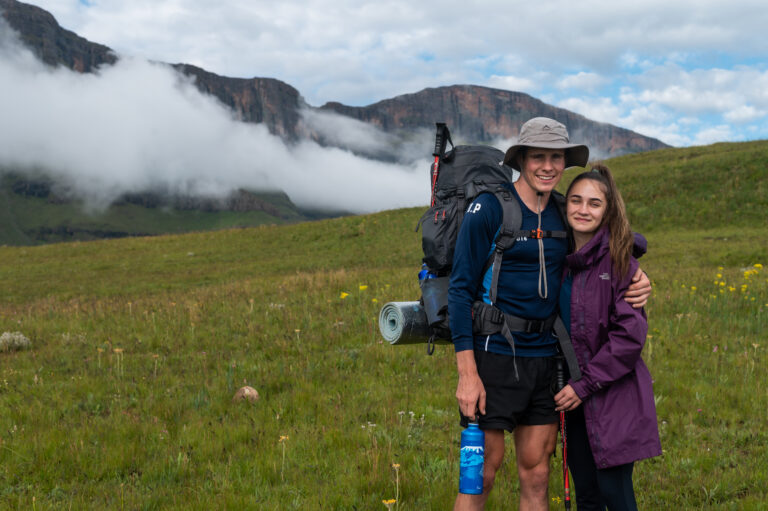
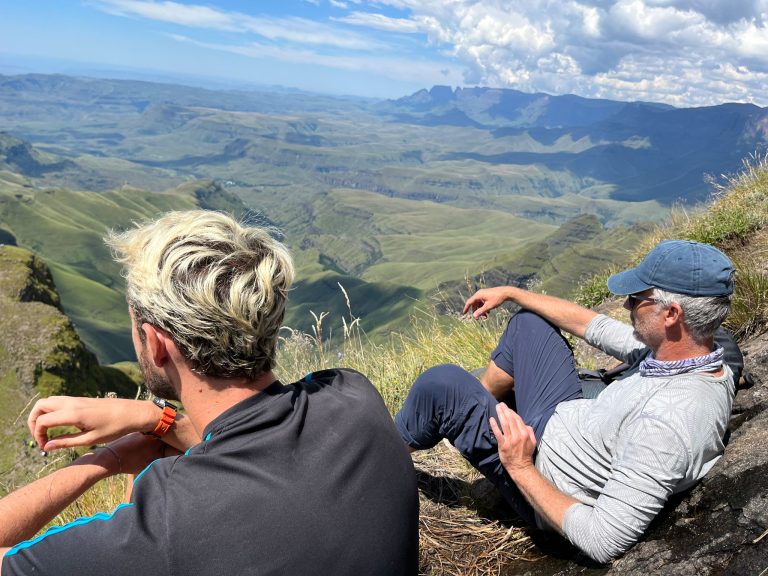
The Drakensberg Grand Traverse
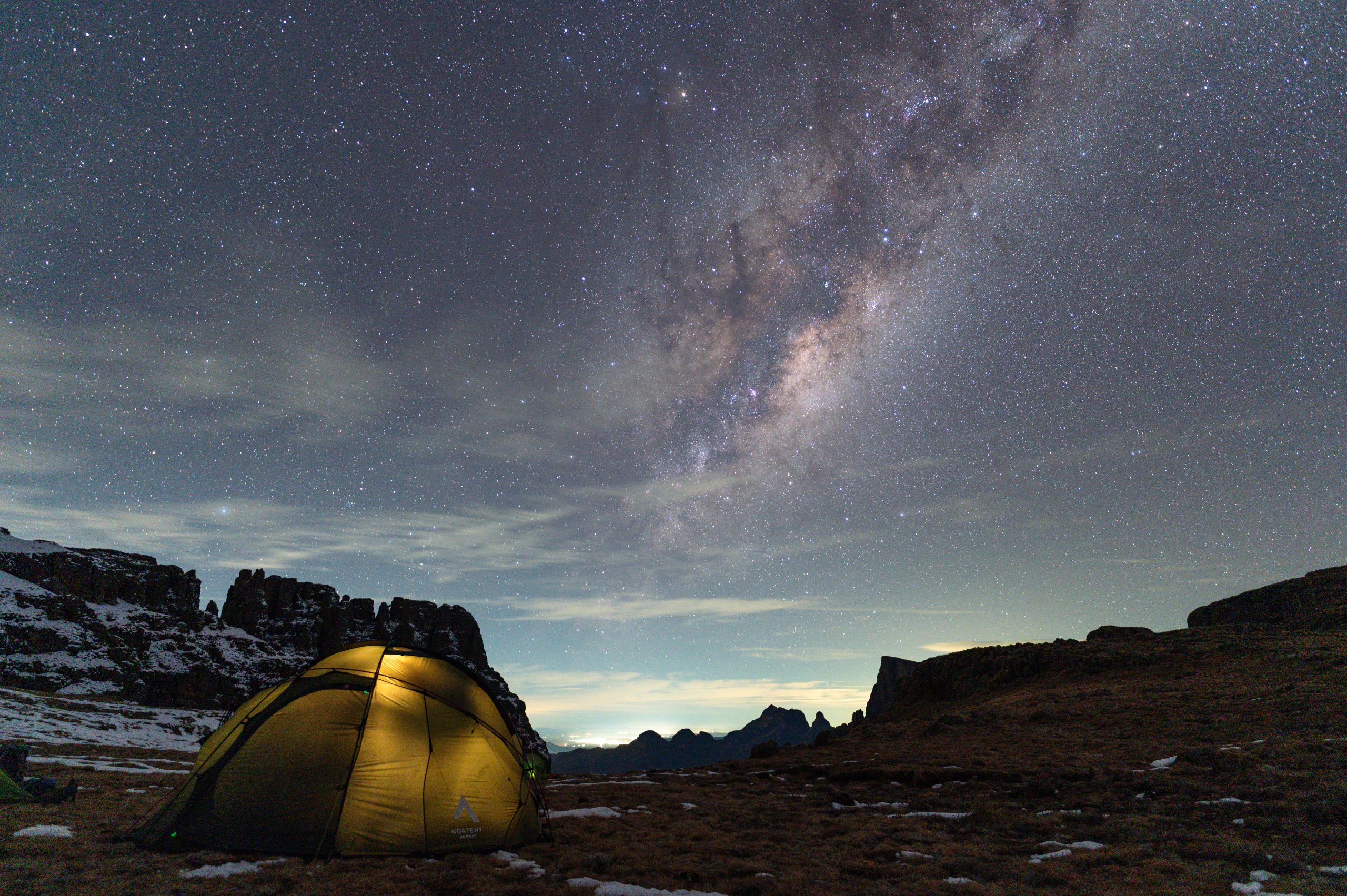
What is the Grand Traverse Drakensberg?
Ah, the Grand Traverse Drakensberg — the hike your legs will never forgive you for, but your soul will thank you for. This isn’t your average “Sunday stroll with a flask of rooibos” situation. No sir. This is a 230km (ish) beast of a trek across the spine of the Drakensberg Mountains, from the iconic Sentinel Peak in the north all the way down to Bushman’s Nek in the south — a journey that includes dodging thunderstorms, second-guessing your life choices, and wondering why no one mentioned the part where you walk uphill for 10 days straight.
But here’s the thing: there’s no official trail. Yup, you read that right. No lovely wooden signs or boardwalks. Just vast, untouched wilderness, GPS coordinates, some sanity-questionable peak tagging, and the occasional angry sheepdog guarding a herd of goats in the middle of nowhere. It’s raw, it’s rugged, and it’s exactly what hiking dreams (and quad cramps) are made of.
The route is considered one of the most challenging hikes in Africa — and definitely the most scenic way to completely annihilate your comfort zone. You’ll be hiking above 3,000 metres most of the way, with no cellphone reception, no showers, and no food courts selling toasted sarmies. Just endless escarpment, moody skies, and maybe your own echo if you scream loud enough.
But don’t worry — if you go with us (hint, hint), we’ll provide all the maps, gear, food, and questionable humour to make sure you don’t end up in Lesotho by accident. Unless you want to. We’re not your mom.


Why you should do the grand traverse Drakensberg Hike
Let’s get one thing out the way: this hike is not for the faint-hearted. Or the faint-calved. Or anyone who uses the phrase “I don’t like being cold.” But if you’re looking for something that’ll push your limits, slap your ego, and then high-five your inner mountain goat — the Grand Traverse Drakensberg is where it’s at.
So why do it?
Because Wi-Fi is overrated and real connection happens somewhere around Day 6 when you haven’t seen a building, a car, or a functioning toilet in nearly a week. Because watching the sunrise from the top of Cleft Peak with nothing but windburn and a questionable instant coffee to keep you company is pure magic. Because there’s something deeply satisfying about using rocks as furniture and convincing yourself that freeze-dried macaroni is “actually not that bad.”
It’s for the solitude. The silence. The unfiltered “holy crap, look at that view!” moments. It’s for the bragging rights and the emotional rollercoaster of crying from both exhaustion and joy in the same hour. It’s for feeling tiny in the best possible way — surrounded by ancient basalt cliffs, thundering waterfalls, and landscapes that make your problems feel laughably small.
Also… because gyms are expensive and boring, and walking across a mountain range with a backpack is basically nature’s version of CrossFit. Just with fewer protein shakes and more baboons judging you from a distance.
So yeah, it’ll break you a little. But it’ll also put you back together with a few new muscles, a cracked sense of humour, and a story that’ll make you sound way cooler at braais.


The route
The Grand Traverse Drakensberg doesn’t have a “route” in the way most hikes do. There’s no trail map neatly folded in a plastic sleeve. There’s no helpful ranger going, “Just follow the signs.” What you get instead is GPS coordinates, a vague sense of direction, and some serious commitment issues from the terrain.
But for the brave few (read: slightly unhinged) who take it on, the unofficial route kicks off at the Sentinel Car Park, right at the top of the Amphitheatre. From there, things escalate quickly — literally — with the infamous Chain Ladders. Nothing quite like climbing two vertical metal ladders bolted into a cliff face to make you question your hobbies.
From here, the fun begins. You’ll head up and down, across and around some of the Berg’s biggest names:

- Mont-aux-Sources: Because one does not simply walk into the Traverse without tagging this beast first.
- Cleft Peak: Steep, silent, and smugly remote — like the Gordon Ramsay of the Drakensberg.
- Mafadi: The highest point in South Africa. Also known as: the summit where your knees go to cry.
- Giant’s Castle: Not an actual castle, unfortunately. Just another chunky rock formation that wants to ruin your thighs.
- Thabana Ntlenyana (optional for the masochists): Technically in Lesotho, technically the highest in Southern Africa, technically optional… unless your ego says otherwise.
The total distance varies depending on how lost you get how many bonus peaks you attempt, but you’re looking at roughly 200–230km over 8 to 12 days of hiking. Most of it is above 3,000m altitude, which means thinner air, dramatic views, and frequent existential crises.
Oh — and let’s not forget the passes. Some, like Rockeries Pass, are just long and steep. Others, like Organ Pipes or Bannerman, are steep and long. And slippery. And soul-crushing. But beautiful! Always beautiful.
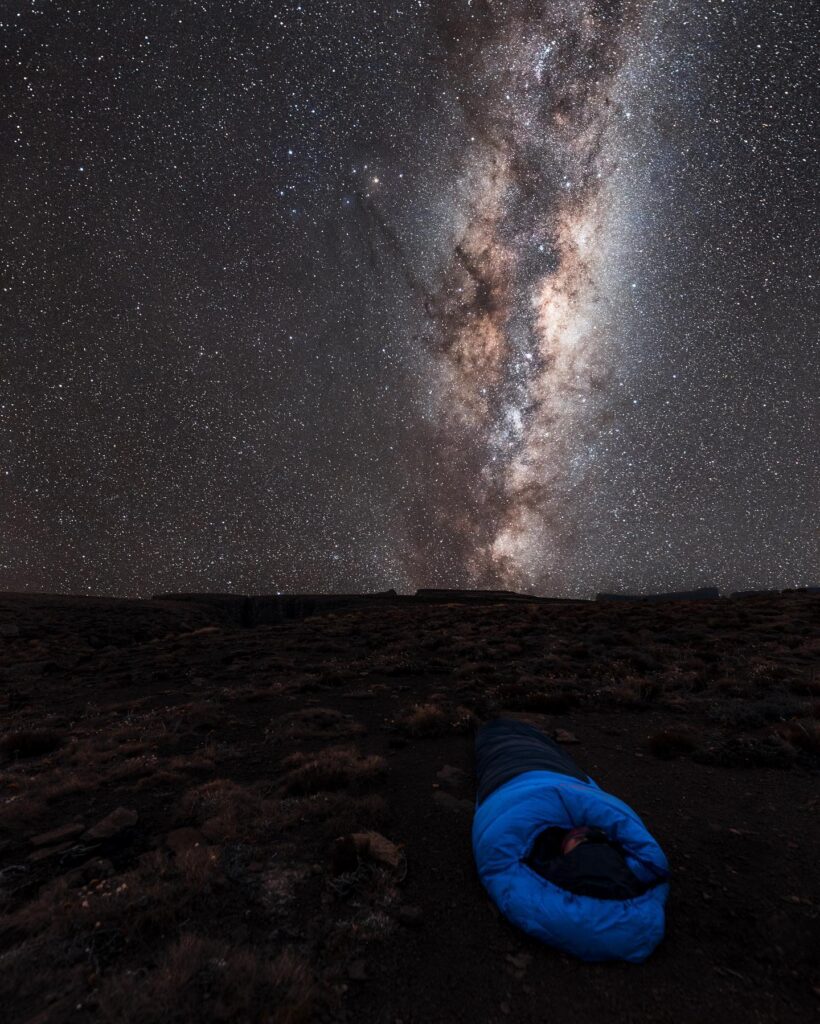
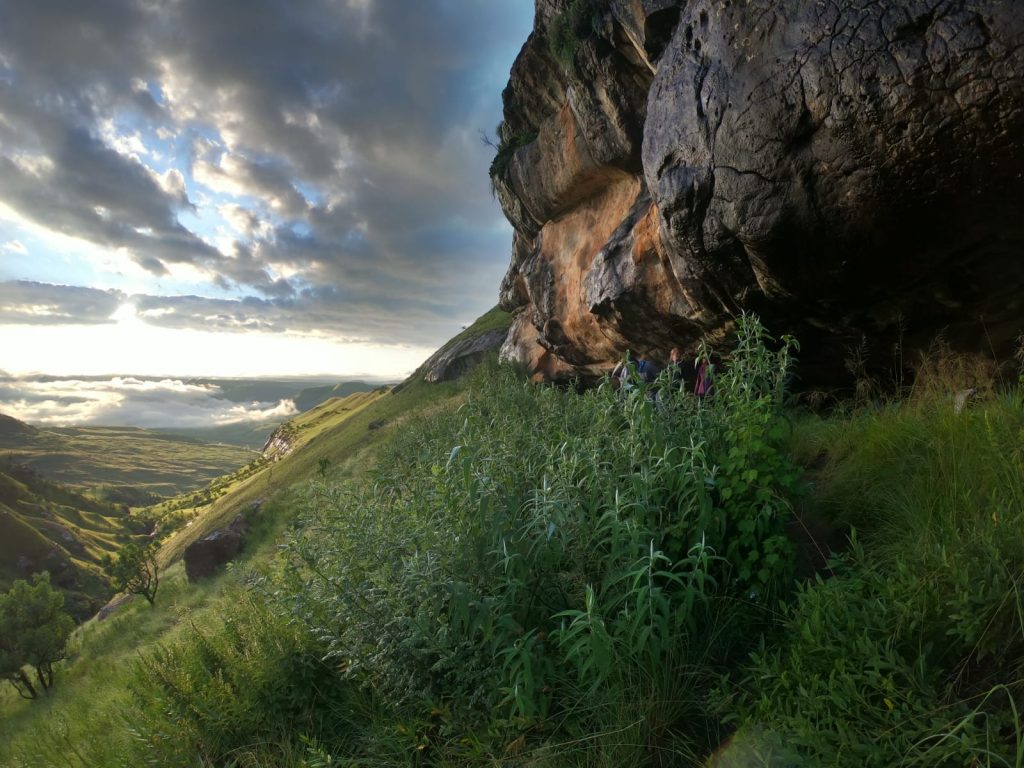
At night, you’ll either camp in caves (yes, literal caves) or pitch a tent wherever the ground looks slightly less hostile than the surrounding area. Facilities? What are those?
There are no towns, taps, or Woolworths along the way. Just endless mountain ridges, icy streams, and the sound of your hiking buddy swearing into the wind.
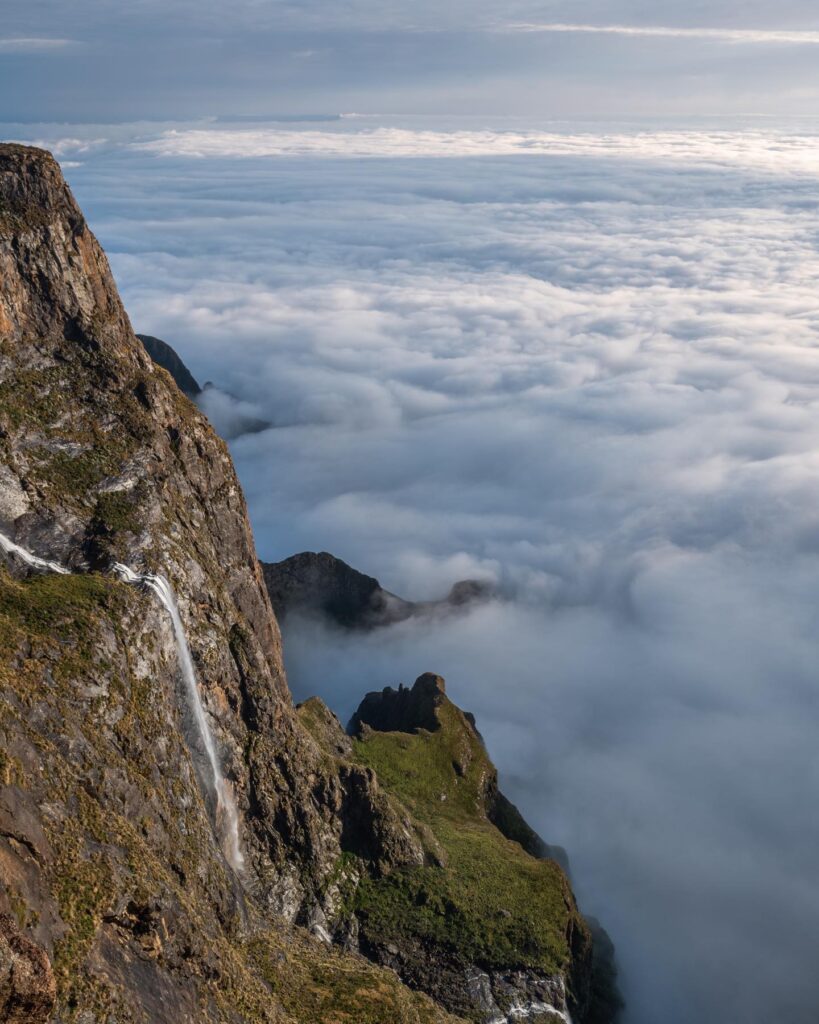

What to expect: weather, terrain, tantrums
If you’re picturing warm sunshine, soft trails, and a light breeze gently nudging you along the path like a motivational Instagram quote, think again. The Grand Traverse Drakensberg has other plans.
The Weather: Choose Your Fighter
The Drakensberg has one setting: unpredictable. One minute you’re basking in golden light like a shampoo commercial, and the next you’re being pelted sideways by hail that feels personal.
In summer, you’ve got rolling thunderstorms, electric skies, and enough mist to make you question whether you’ve walked into a bad horror film. In winter, the skies are clearer but the temperatures will do their best to turn your fingertips into little icicles of regret. And in the shoulder seasons, you get the best of both worlds: mild days, crisp nights, and the lingering threat that Mother Nature might still mess with you just for fun.
Moral of the story: pack for everything, expect anything, and emotionally prepare for your weather app to be wrong.
The Terrain: Not Exactly a Walk in the Park
Now let’s talk about the ground beneath your boots. This isn’t a trail. It’s an ongoing series of steep climbs, technical descents, boulder hopping, slippery grass slopes, rocky outcrops, and the occasional marshy swamp that’s absolutely dying to eat your shoe.
There are no trail markers on the Grand Traverse Drakensberg hike, no safety railings, and definitely no friendly little benches to rest on. What there is plenty of: ankle-twisting surprises, thigh-burning climbs, and scenery so good it almost distracts you from the burning sensation in your soul.
Expect to walk long distances over varied terrain, most of it tilted aggressively uphill, downhill, or both at once, somehow. It’s confusing, it’s demanding, and it’s exactly what makes the Traverse so ridiculously rewarding.


The Tantrums: Yours, Probably
At some point, you will have a moment. Maybe it’ll be when your socks are soaked for the third day in a row. Maybe it’ll be during your fifth cup of suspiciously beige instant oats. Maybe it’ll be when you realise your hiking partner snores like a dying wildebeest. Regardless, the tantrum is coming.
Physical fatigue, mental wear, the endless sound of wind trying to push you off a cliff — it all builds up. There will be whining. Possibly some crying. Maybe even a group decision to never speak again until someone finds flat ground.
But then, just as you’re ready to throw your trekking poles off the escarpment, you’ll look up and see the sunrise bursting over the peaks. The valleys below will stretch into infinity, you’ll hear nothing but your breath and the wind, and in that moment, it will all make sense.
At least until the next hill.
How hard is it really
Look, we’re not going to sugarcoat this. The Grand Traverse Drakensberg is hard. Like, “question all your life choices while gasping for air at 3,000 metres” kind of hard. It’s not called one of the toughest hikes in Africa because it sounds cool in a brochure. It’s earned that reputation the old-fashioned way — by chewing up hikers and spitting them out somewhere near Bushman’s Nek with a thousand-yard stare and an intense relationship with their foam sleeping mat.
The Physical Side
You’re looking at up to 230 kilometers of unmarked, high-altitude hiking. Most days clock in between 20 to 30 kilometers. And here’s the kicker — you’re carrying everything you need on your back. Your tent, sleeping bag, food, stove, emotional baggage — it’s all going with you, one laboured step at a time.
Climbs? Yes. Descents? Also yes. Flat bits? Don’t get your hopes up. This is the Berg. It doesn’t do “flat.” Just relentless undulation designed to remind you that you are, in fact, a mere mortal.
Add in weather that can turn on you like a feral cat, and you’ve got yourself a workout that would make a Navy SEAL sweat through his merino base layer.
The Mental Side
This is the part that gets most people on the Grand Traverse Drakensberg hike.
There’s no signage, no cell signal, and no comfy lodge with fluffy towels waiting at the end of each day. It’s you, your thoughts, your GPS (which you’re really hoping you charged properly), and the kind of silence that starts to get a bit… echoey after a while.
Fatigue hits hard. Motivation dips. You start fantasizing about things like hot chips and indoor plumbing. And at some point, your hiking buddy starts to look like a roast chicken.
But.
You’ll also discover reserves of strength you didn’t know you had. You’ll learn that you can keep going long after your legs said no, your shoulders gave up, and your knees filed a formal complaint. And somewhere between the crying and the cursing, you might even start enjoying it.
Kind of.


Porters, gear and going guided
Let’s address the backpack in the room. Yes, you can absolutely try and carry everything yourself like a heroic solo adventurer starring in your own Discovery Channel special. But after Day 2 of hauling a 25kg pack up vertical ridgelines in thin air, you’ll be fantasising about trading a kidney for a porter.
Porters: Not Sherpas, But Absolute Legends
On a guided Soul Adventures traverse, we do offer porter support — but let’s set expectations straight. These guys aren’t lugging your novelty pillow and your third pair of hiking socks. They carry the tents and a portion of the group’s food — that’s it. You’re still responsible for your personal gear, snacks, emotional stability, and whatever bizarre luxury item you thought was a good idea to bring (hint: it wasn’t).
Porters are usually Basotho herders who know these mountains better than your GPS ever will. They’re fast, fit, and deeply unimpressed by your complaints. Show them some respect — they’re the quiet backbone of your survival.

Gear: Don’t Skimp, Don’t Suffer
This is not the hike where you “make do” with your cousin’s old tent from that one festival. You need serious, 4-season mountain gear. Think:
- A proper mountaineering tent (windproof, waterproof, baboon-proof would be a bonus)
- Sleeping bag rated for temperatures that make penguins uncomfortable
- Mattress, headlamp, stove, pots, filter, drybags, and every piece of gear your wallet tries to talk you out of
- Layers of clothing that make you look like a marshmallow but keep you alive at 3am
We supply most of the key items on our guided Grand Traverse Drakensberg hikes — because watching people turn into human popsicles isn’t part of our business model.
Going Guided: Let Someone Else Suffer for You (Logistically Speaking)
Could you do the Grand Traverse Drakensberg hike on your own? Technically, yes. If you’re experienced with navigation, mountain safety, survival skills, and have a deep passion for reading topographical maps in gale-force winds. But if you’d like to focus on actually enjoying the hike instead of wondering whether you’re halfway to Lesotho, then going guided is the way to go.
With Soul Adventures, we handle:
- Navigation (you won’t get lost — unless it’s in your own thoughts)
- Meals (freeze-dried, but made with sarcasm and love)
- Gear provision (actual gear, not camping cosplay)
- Porter logistics
- Emergency satellite comms (just in case you try to befriend a puff adder)
It’s like a mountain spa retreat, if the spa also involved walking 25km a day, sleeping on rocks, and crying into your instant oats.


How to prepare
The Grand Traverse Drakensberg in South Africa is not something you casually rock up to after doing a few laps around the block and watching Wild on Netflix. This isn’t a hike — it’s a full-blown expedition with altitude, attitude, and a personality disorder.
Let’s break down what you actually need to do to get ready.
Physical Preparation: Legs of Steel, Knees of Teflon
Start training well in advance. And no, carrying two shopping bags from Woolies to your car does not count as a weighted hike.
You’ll need:
- Long back-to-back hiking days with a full backpack. Your training hikes should be 15–25km with elevation gain. And if it rains during your training? Even better — that’s called realism.
- Stair training or steep trail climbs. Lots of them. The Traverse doesn’t gently incline — it launches you upward like it’s got something to prove.
- Core and leg strength. You don’t need to be a gym rat, but you should be able to squat down, pick up your bag, and stand back up without calling an ambulance.
- Cardio endurance. If you get out of breath tying your shoelaces, you’ve got some work to do.
Bonus: if you’re based in South Africa, use other Drakensberg hikes to prep. Hit trails like Mnweni, the Northern Traverse, or even just a tough weekend up to Bannerman Hut. If it burns, you’re doing it right.
Emotional Preparation: For When the Mountains Break Your Brain
You will be cold. You will be tired. You may even cry into your porridge. That’s part of the experience.
Mental prep includes:
- Getting comfortable with discomfort: Rain, blisters, and sleeping on slightly angled rocks are part of the package.
- Managing your expectations: Not every moment is going to be transcendental. Sometimes it’s just one foot in front of the other while swearing under your breath.
- Building resilience: Because there’s no quick exit. Once you’re committed, you’re in it — and your only way out is forward.
Also, know that group morale swings faster than the weather. One minute you’re singing in the sunshine, the next someone’s threatening to burn their backpack. It’s normal. It’s beautiful. It’s chaos.
Gear Familiarity
Test everything before the hike. Don’t be that person discovering how to pitch their tent for the first time at 3,200 metres in a windstorm. Wear your boots in. Use your stove. Sleep in your sleeping bag outside. Learn where your gear goes and how to pack it fast.
The Grand Traverse Drakensberg Hike is not the place for firsts — unless it’s your first time crying over a broken trekking pole.
Best time to go
Ah yes, the age-old question: “When should I do the Drakensberg Grand Traverse?” The answer depends on what flavour of suffering you’d like to experience — icy winds, electric storms, swampy grasslands, or a delightful cocktail of all three.
The truth is, there is no perfect time. There’s just less terrible and moderately cruel.
Summer (November to February): Welcome to Thunderstorm Roulette
Summer brings lush green hills, dramatic skies, and… almost guaranteed afternoon storms. We’re talking lightning, hail, torrential rain, and that special kind of panic when you realise you’re the tallest thing on the escarpment holding metal trekking poles.
Pros:
- Warm nights (relatively)
- Plenty of water sources
- Wildflowers and some beautiful stormy drama for your photos
Cons:
- Wet boots, wet gear, wet soul
- Thunder that sounds like the gods are bowling
- Slippery terrain and sketchy visibility
Winter (June to August): Clear Skies and Frozen Eyebrows
Winter is the go-to for experienced hikers who enjoy hypothermia as a hobby. You’ll likely get stable weather, clear views, and crisp air so clean it makes city lungs cry. Also, fewer people, because most sane humans are indoors.
Pros:
- Better navigation with clear skies
- Little to no rain
- Sunrise and sunset views that make up for the existential chill
Cons:
- Water freezes in your bottles overnight
- Your toothpaste turns into a solid object
- You start referring to your sleeping bag as “home”


Shoulder Seasons (March–May & September–October): The Goldilocks Window
This is the sweet spot for most hikers — not too hot, not too cold, and the weather tends to behave. Mostly. You’ll still want to prep for anything, but statistically, the odds are a little less stacked against you.
Pros:
- Comfortable temps
- Balanced daylight hours
- Fewer weather tantrums
Cons:
- Still unpredictable — this is the Berg, not Disneyland
- Can be windy, especially in spring
Our Take?
We prefer the shoulder seasons for guided hikes — fewer gear-freezing nights, more scenic days, and slightly lower chances of storm-induced regret. But hey, if you like your adventure with a side of lightning or enjoy the sensation of your toes slowly dying, go wild.
Booking with soul adventures
Let’s bring it home with Section 10: Booking a Guided Grand Traverse Drakensberg hike with Soul Adventures — where we subtly (read: blatantly) point out why letting us take care of things is the best decision you’ll make since investing in decent hiking socks.
10. Booking a Guided Traverse with Soul Adventures
So. You’ve read about the weather, the terrain, the soul-crushing climbs, the baboons, the freeze-dried sadness in a bag — and you’re still keen? You’re our kind of person.
Now let’s talk about how to actually do the Drakensberg Grand Traverse without getting completely chewed up by logistics, navigation errors, and questionable gear choices. The answer: book a guided hike with us.
Why Go Guided?
Because planning this hike on your own is like trying to bake a soufflé during a windstorm while blindfolded. You could do it… but it’s going to go sideways. Fast.
When you book with Soul Adventures, we take care of the hard stuff so you can focus on the hike (and your slow emotional unraveling).
What we offer:
- Expert guides who know the route, the caves, the escape points, and how to fix a broken morale at 3,200m
- Top-quality gear included (tents, sleeping bags, mats, stoves — the works). No leaking dome tents from the 90s here
- All meals on the mountain. Freeze-dried, yes, but we’ve perfected the art of rehydrating sadness with a splash of humour
- Porter support to carry group food and tents. You still carry your personal gear, but at least you don’t have to shoulder the chilli con carne
- Transport from Johannesburg and back, because your legs will not want to drive after this
- Emergency satellite comms, just in case your ankle, weather, or sanity decides to tap out

Who Is This For?
We won’t lie — this isn’t for everyone. If you need daily showers, turn-down service, or snack platters at sundown, you’re going to be disappointed.
But if you’re the kind of person who:
- Wants to test their limits in one of the most beautiful mountain ranges in the world
- Can laugh when things go wrong (because they will)
- Enjoys the feeling of being small, wild, and occasionally very cold
- Wants a brag-worthy story that doesn’t involve bottomless brunch
Then welcome aboard.
How to Book
Simple. Head to souladventures.co.za, find the Drakensberg Grand Traverse, and hit that booking button like your calves aren’t about to suffer for the next 10 days.
Prefer to chat first? No problem. Drop us a message or send a smoke signal — we’re happy to answer your questions, calm your nerves, or talk you out of bringing a hairdryer.